Serogroup or antigen
Averaging a group of beads into one antibody, or splitting out the antigen that carries the excess.
Averaging vs. splitting
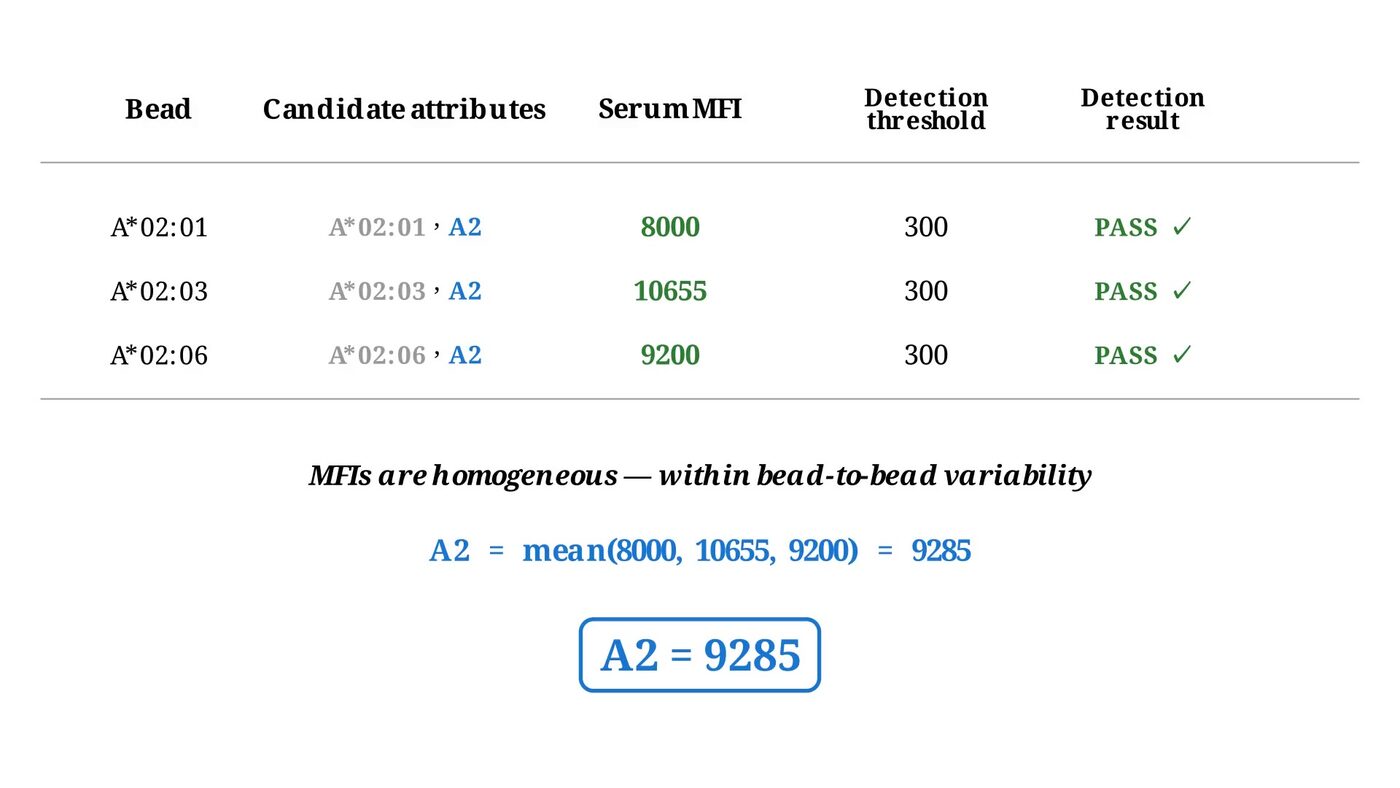
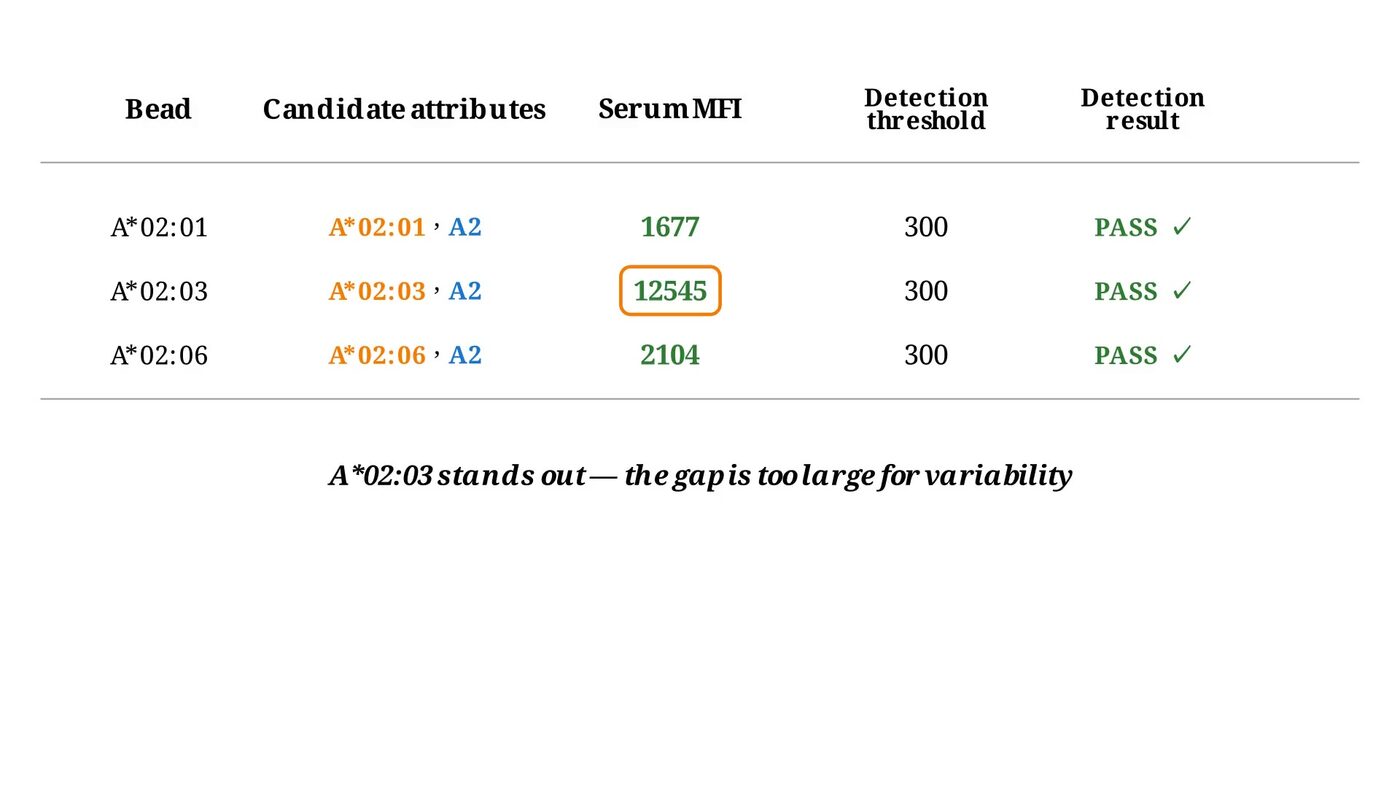
When several beads carry the same serological group, SAgA must decide how finely to report the antibody: as a single group-level call, or split into an antigen-specific one. It compares the beads' MFI.
| Situation | What SAgA does |
|---|---|
| MFI homogeneous — values close, within usual bead variability | Averages them into a single serological-group antibody. |
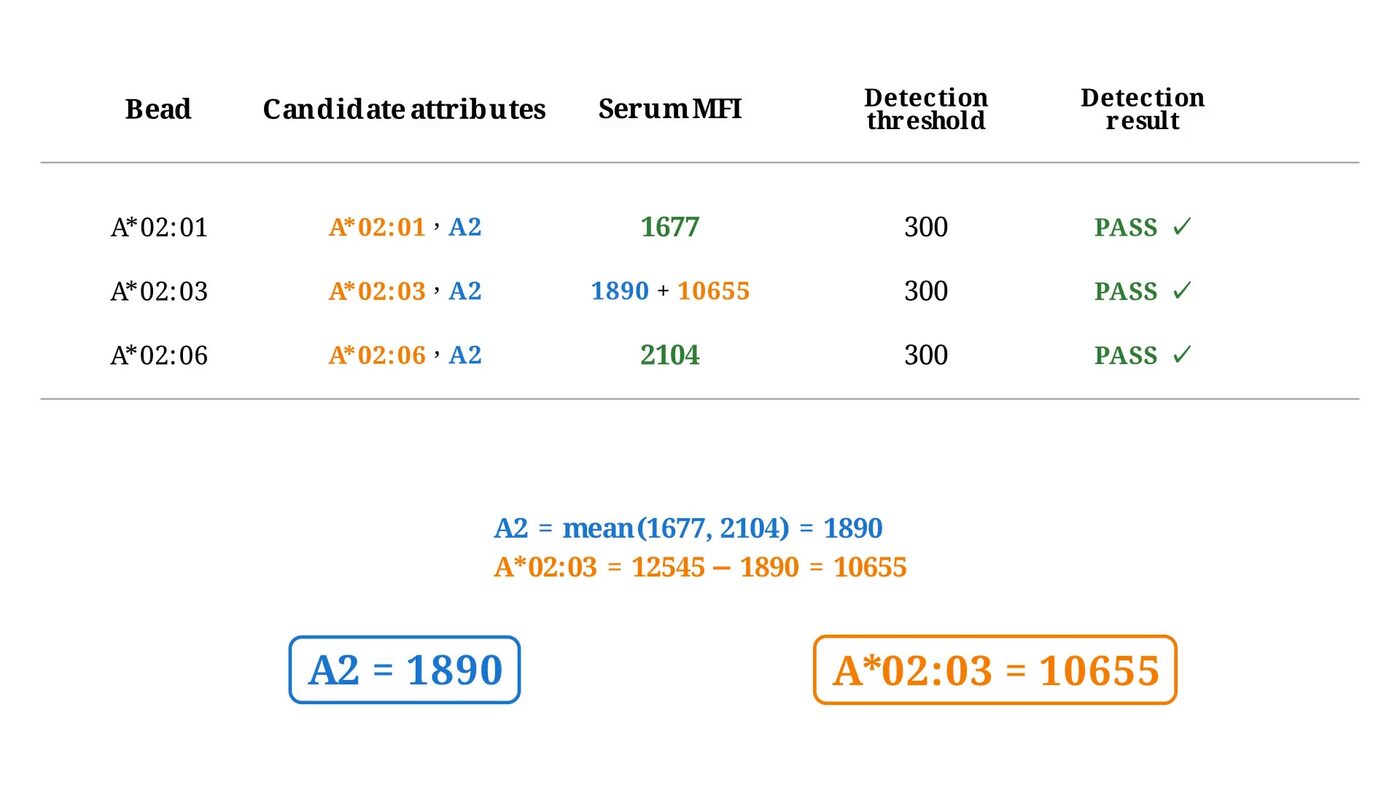
| MFI heterogeneous — one bead stands far above the rest | Splits: a group antibody shared by all beads, plus an antigen-specific one carrying the excess. |
“Heterogeneous” depends on how many beads carry the serogroup: with two beads, one standing far above the other; with more than two, at least one standing above the rest.
Homogeneous · average into one serogroup antibody
Heterogeneous · split off the antigen carrying the excess
Several alleles, several readings
With more alleles the picture is richer — say A2, A*02:03 and A*02:06 all reactive, in various patterns (all homogeneous; A2 alone plus a split A*02:03/06; or three distinct levels). Again, the user decides the strategy: are there several antibodies, each specific for one allele, or fewer antibodies specific for several alleles? It may equally be a matter of differential affinity — a single antibody raised against the three alleles, binding each to a different degree.
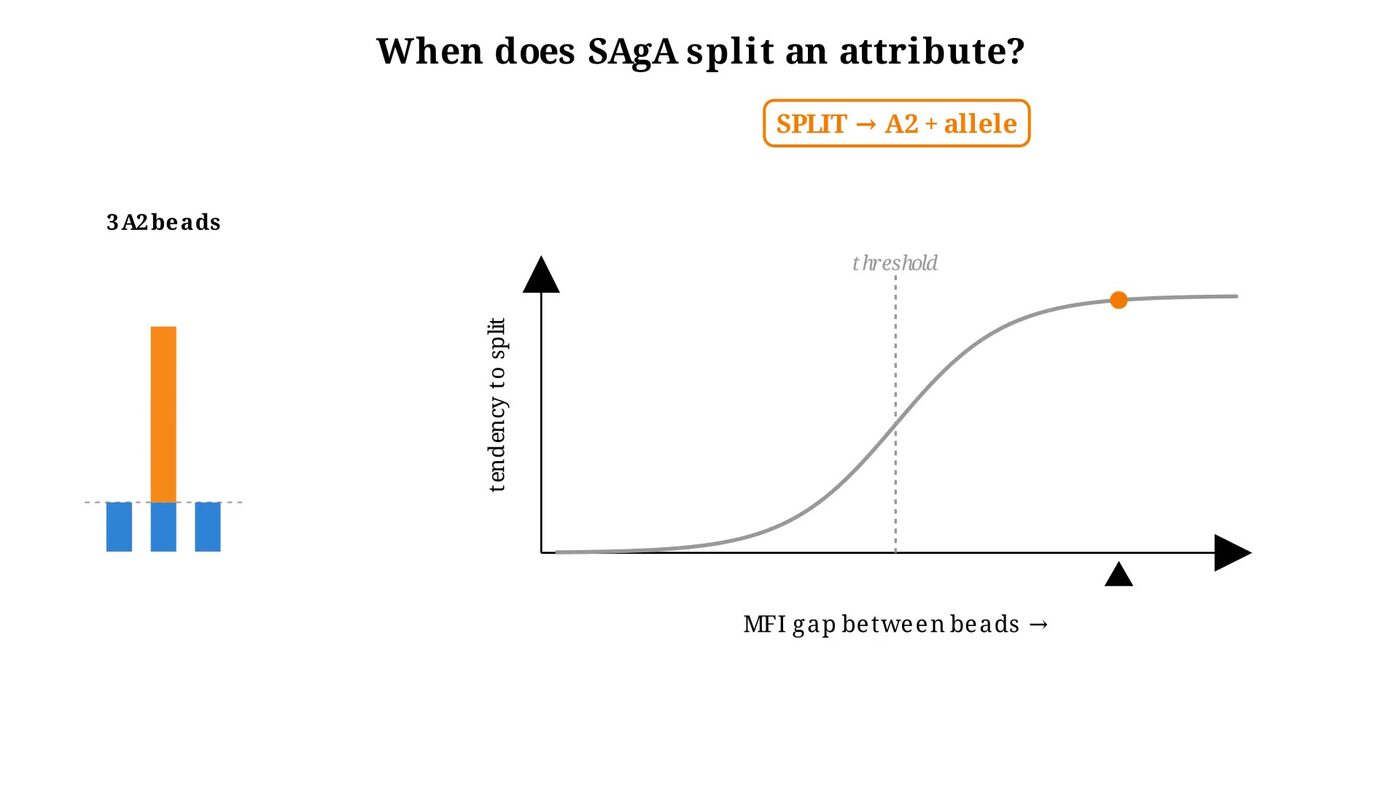
The choice follows a smooth rule: the wider the gap between beads, the more SAgA leans towards splitting off a separate antigen-specific antibody. The default transition is calibrated from the combined experience of senior HLA experts, so SAgA's behaviour matches what an expert would conclude.
Cases for this part