Signal decomposition
When several antibodies land on the same bead, SAgA shares the signal between them — its central strength.
3.1 · Alpha + beta on DQ
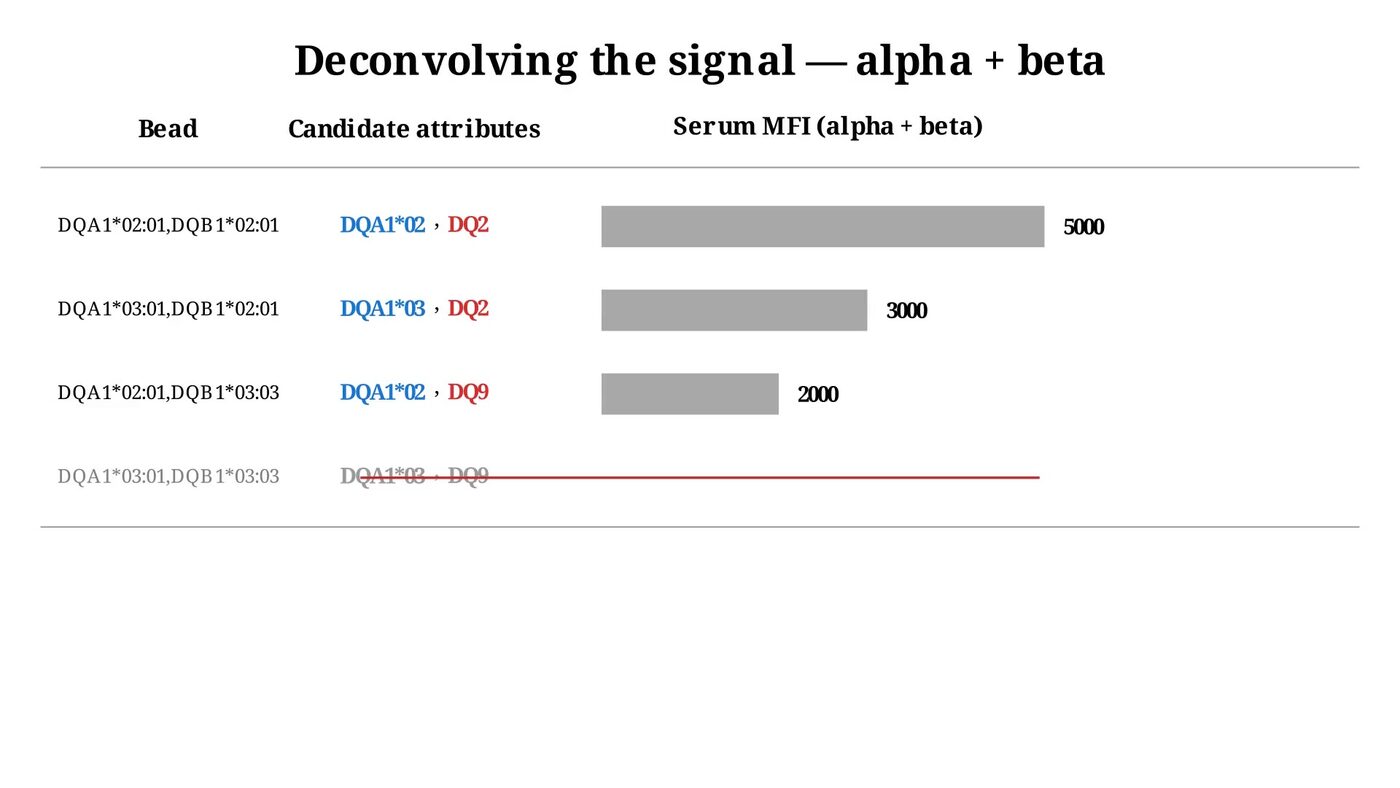
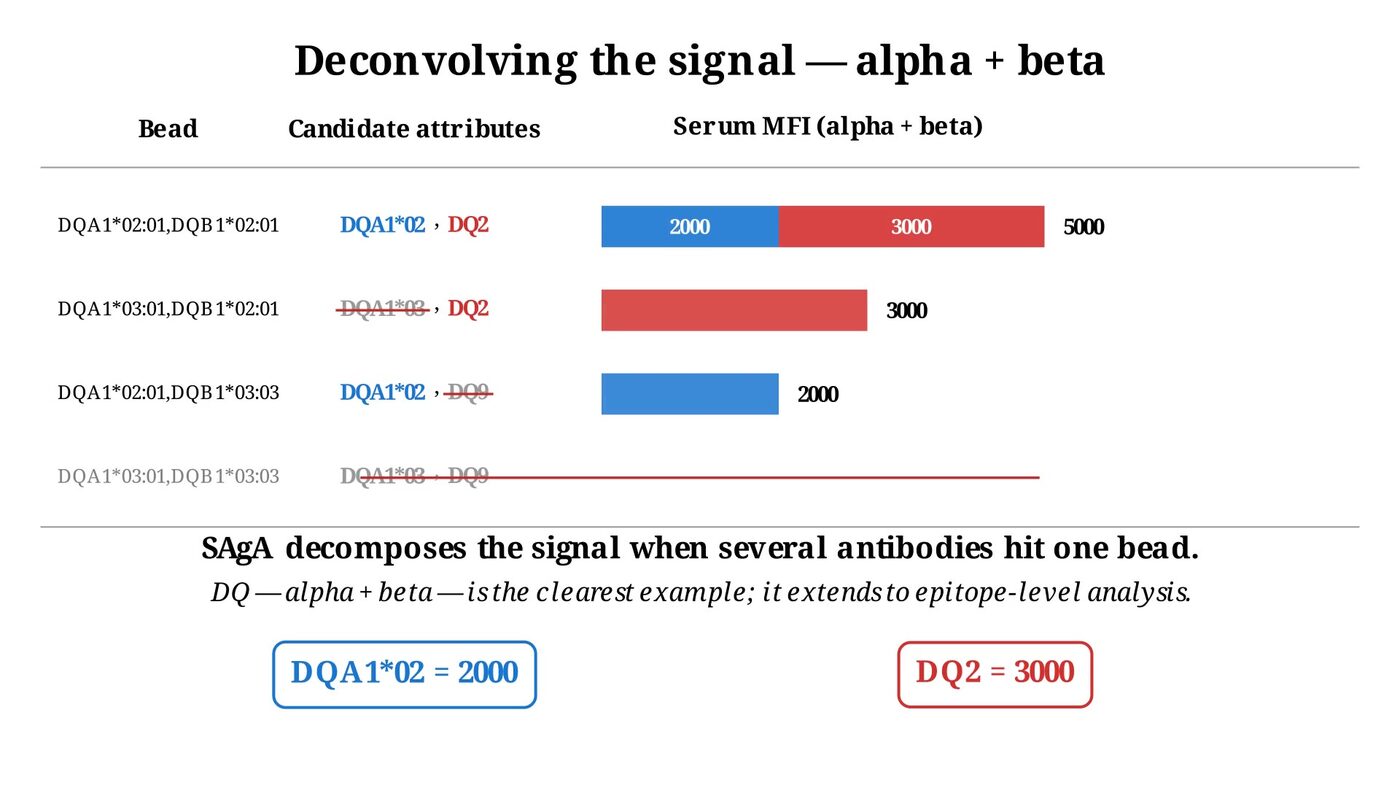
SAgA's core strength is decomposing a single bead's MFI into the several antibodies behind it. DQ is the clearest example: each molecule pairs an alpha chain (the DQA1 gene) with a beta chain (the DQ serogroup), so a bead can carry two antibody targets at once.
Using the masking rule from Chapter 1, some beads are left with a single surviving target, which pins down its level: a bead left with only its beta target reveals the pure beta contribution, and one left with only its alpha target reveals the pure alpha. The bead carrying both is then their sum.
3.2 · A full DQ panel
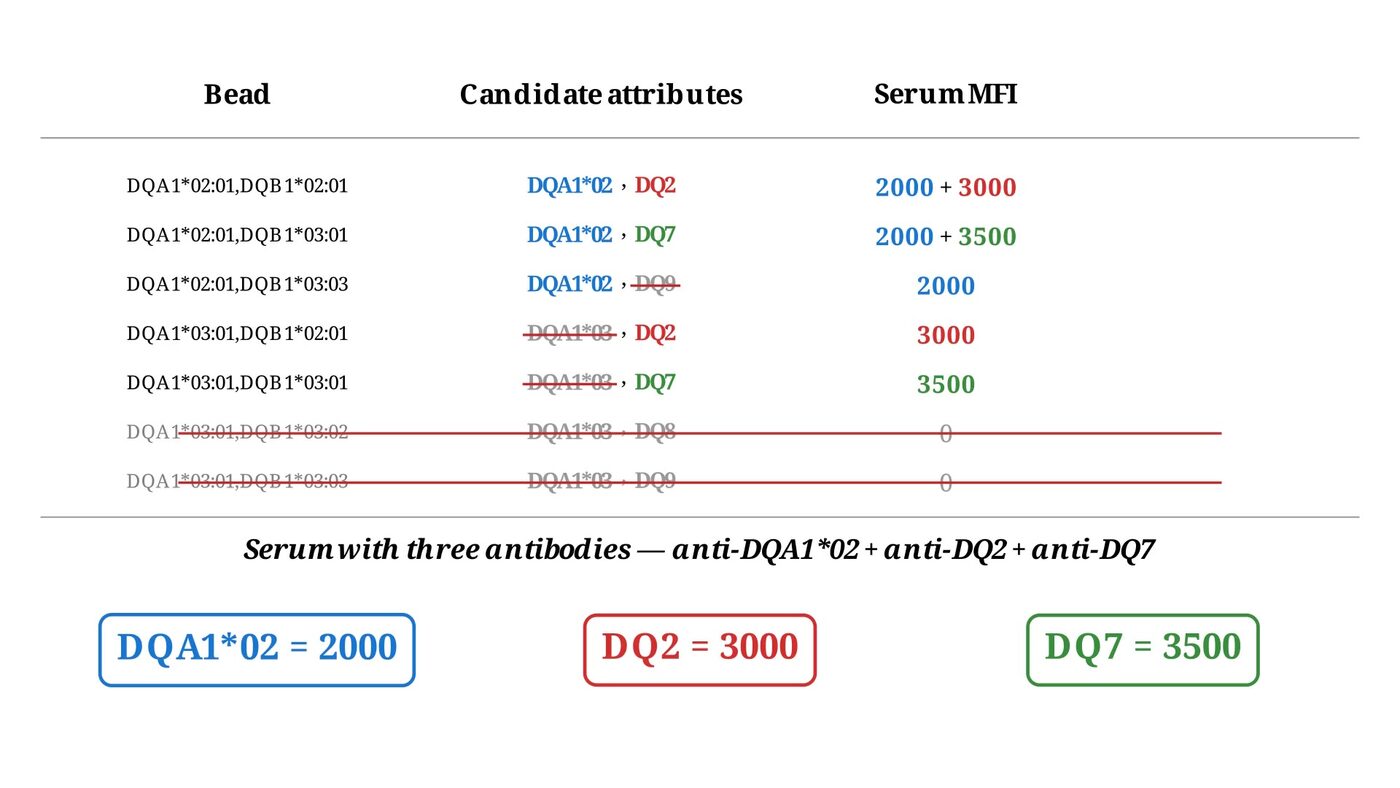
The same logic scales to a realistic panel with several antibodies at once. SAgA excludes the negative beads, strikes the attributes they carry from every bead, identifies each surviving antibody, then decomposes each positive MFI into its contributions — some beads carrying two antibodies at once.
3.3 · Noisy MFI & best fit
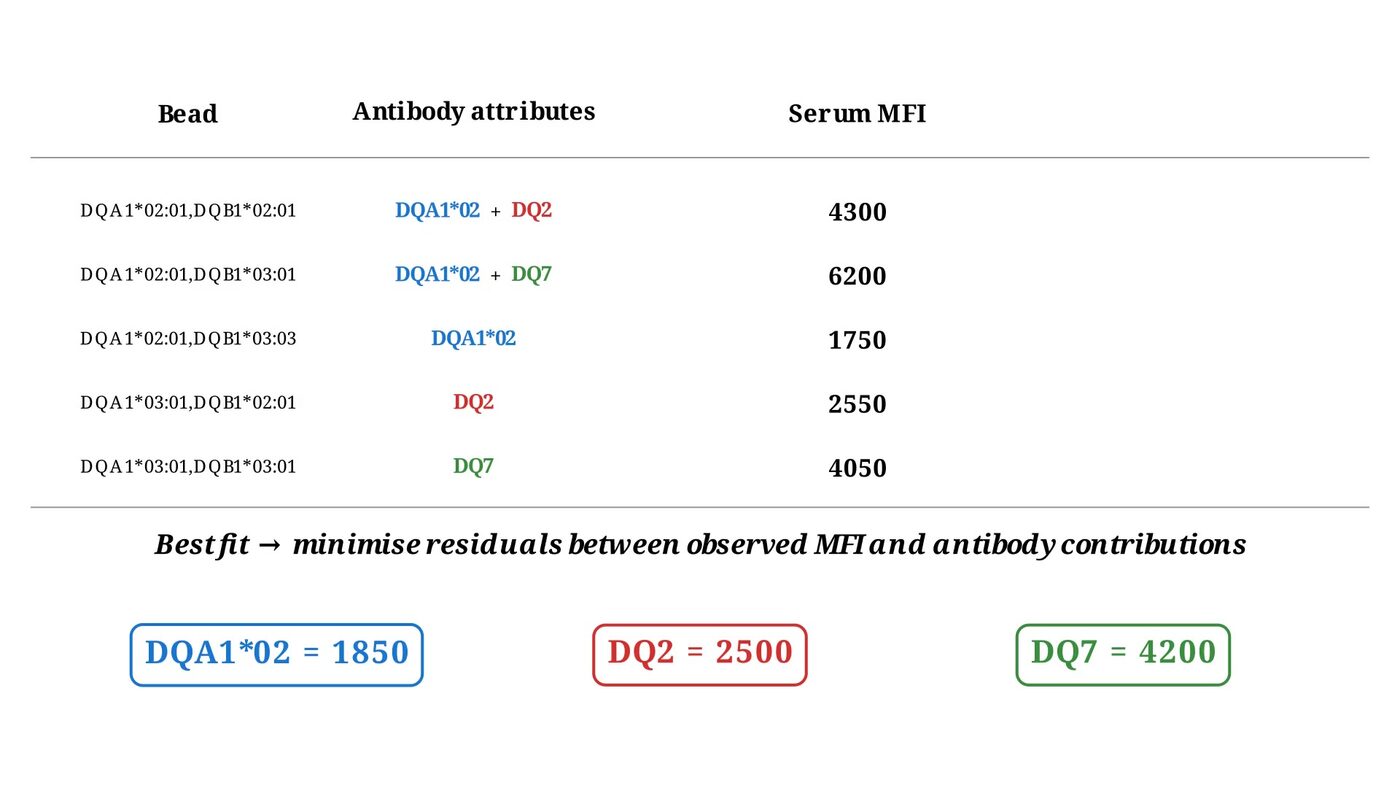
Those clean sums are the ideal. In practice, the same antibody binds with slightly different intensities on every bead — real MFI are noisy, and two beads carrying the same antibody no longer agree exactly on its level.
SAgA then looks for the single set of antibody levels that, together, best reproduces every bead at once — a best fit that minimises the residuals between observed MFI and the summed antibody contributions.